
Travel guide & FAQ
One day in Tunis: a route that actually works
Tunis rewards one well-planned day far more than two unplanned ones. The mistake is treating the medina, the Bardo, Carthage and Sidi Bou Saïd as four stops on a list; they are spread across the city and the coast, and the order decides whether the day works.
The order that works
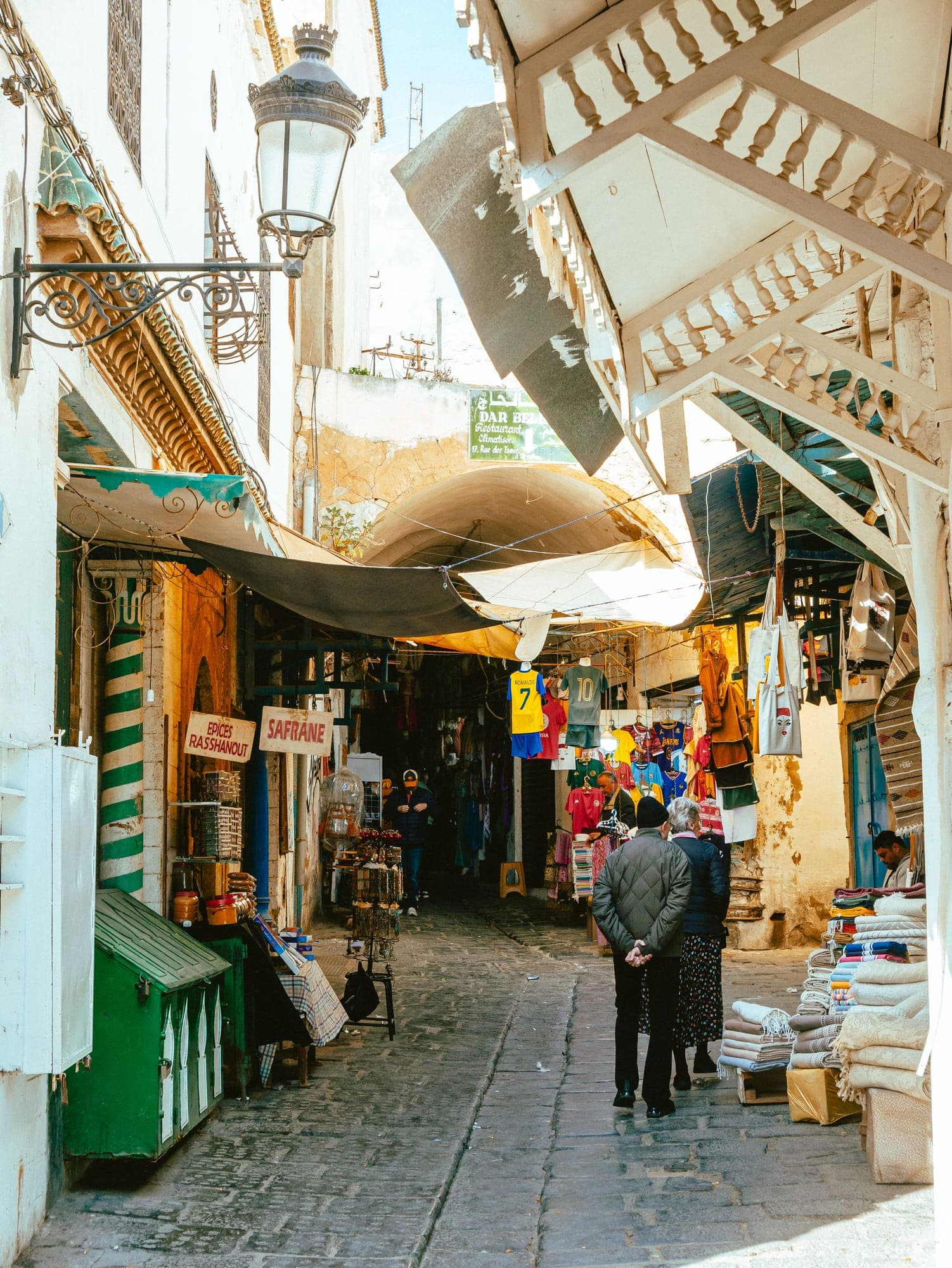
Medina first, in the morning. The souks open early, the covered lanes are still cool, and the light in the narrow streets is better before the sun is overhead. By midday the medina is hot and crowded, and it is the one stop that is genuinely unpleasant in the afternoon heat.
Carthage in the middle of the day. The archaeological sites are open and exposed, so this is the least comfortable slot — but it is also where shade is scarce everywhere else, and the sites are large enough that you keep moving.
Sidi Bou Saïd last, for late afternoon. The village faces the sea, the terraces catch the evening light, and the coach traffic has gone by five. Ending here with mint tea over the Gulf of Tunis is a considerably better finish than ending in a museum.
Reverse this order and you spend the hottest part of the day in a covered souk and arrive at the coast in the glare of noon.
The medina of Tunis
A UNESCO World Heritage site since 1979, and still a working quarter rather than a preserved one. The Zitouna Mosque sits at the centre; around it the souks are organised by trade, which is how they were laid out — the perfumers in one lane, the coppersmiths hammering in another, the chéchia makers in their own small square.
Two hours with someone who can explain what you are looking at is worth more here than four hours alone. Without that, the souks read as shops. With it, you notice which doorways are Ottoman and which are Hafsid, and why the covered sections run where they do.
The Bardo, and whether to include it
The Bardo Museum holds one of the world's largest collections of Roman mosaics, taken from sites across Tunisia and housed in a former Ottoman palace. If you have any interest in the Roman period it is the best hour you will spend in Tunis.
But be honest about the arithmetic: the Bardo needs a proper hour and a half, and adding it to a single day means cutting something else. On a five-hour half-day it does not fit alongside both Carthage and Sidi Bou Saïd. On a full eight-hour day it does.
Carthage: which part
Carthage is not one site but a scattered archaeological zone across a wealthy coastal suburb — the Antonine Baths on the shore, the Byrsa Hill with its museum and its view, the theatre, the cisterns. Trying to see all of them in one visit is how people end up remembering Carthage as a lot of driving between low walls.
Two are enough. The Antonine Baths for the scale and the setting against the sea, and Byrsa Hill for the overview and the context. That gives you roughly ninety minutes and leaves the day intact.
Getting between them
The TGM light rail runs from Tunis Marine out to Carthage and Sidi Bou Saïd and is cheap and straightforward, though it does not serve the Bardo and leaves you walking between the Carthage sites in the heat.
The reason most visitors end up with a driver is not luxury — it is that this specific route involves four locations spread across roughly thirty kilometres, and the time saved between them is the difference between three stops and four.
Is one day enough for Tunis?
One day covers the medina, Carthage and Sidi Bou Saïd properly if you follow the morning-to-evening order above. Adding the Bardo Museum needs a full eight-hour day rather than a half-day.
What is the best time of year to visit Tunis?
Spring, from March to May, and autumn, from September to November. Warm enough for the coast, cool enough to walk the medina and the archaeological sites comfortably. July and August are hot inland and busiest everywhere.
Do you need a guide in the medina of Tunis?
Not for safety — it is a working quarter and generally welcoming. But the medina is where a guide changes the experience most, because almost nothing is labelled and the layout by trade is not obvious without explanation.